
A More Comfortable Home, Effortlessly and Efficiently
When planning a new home or major refurbishment, considerable attention is given to architectural design, interior finishes and the quality of the living environment. Yet one of the most important aspects of everyday life is something we often take for granted: feeling comfortable in our own homes. A beautifully designed property should never feel too hot in summer or too cold in winter. Nor should maintaining a comfortable temperature require constant adjustments to thermostats, heating systems or air conditioning.

At AVINU, we believe intelligent comfort control should deliver three fundamental benefits:
✔ Consistent comfort
✔ Effortless control
✔ Improved energy efficiency
Achieving this requires more than installing high-quality heating and cooling equipment. It requires a coordinated approach to how the entire home operates.
Why Heating and Cooling Should Work Together?
Modern homes frequently incorporate several different systems to maintain comfortable indoor conditions. Underfloor heating, radiators, towel rails, heat pumps, air conditioning and ventilation all have important roles to play. However, these systems are often designed and installed by different specialist contractors, each responsible for their own equipment. Without a coordinated control strategy, homeowners can find themselves with multiple thermostats, separate applications and systems that operate independently.
For example, underfloor heating might continue warming a room while the air conditioning is attempting to cool it. Both systems may be performing exactly as instructed, yet the result is unnecessary energy consumption and inconsistent comfort. The solution is not necessarily more technology. It is better coordination of the technology already within the home.
Intelligent Comfort Control for a Home That Understands How You Live
Every household has its own routines and preferences. Some rooms are occupied throughout the day, while others are used only occasionally. Bedrooms may benefit from cooler temperatures overnight, while living spaces require different levels of comfort depending on the time of day and season. An intelligently designed home takes these requirements into account.
Rather than treating every room identically, the system operates within a carefully considered framework reflecting the property, its heating and cooling capabilities, and the lifestyle of those living there. Temperatures, occupancy, schedules and environmental conditions can all contribute to how the home responds. As the system is commissioned and refined around the household’s preferences, it becomes increasingly aligned with everyday living. The ultimate objective is that you no longer need to think about heating and cooling. Your home simply maintains the comfort you expect, quietly and efficiently in the background.
Bringing Heating, Cooling and Shading Together
One of the greatest advantages of an integrated intelligent home is the ability to coordinate different building services. Heating and cooling are obvious examples, but automated blinds and curtains also play an important role in managing indoor temperatures. During warmer months, the home can respond to excessive solar gain by lowering selected blinds before rooms become uncomfortably warm. This can help reduce the demand placed on air conditioning.
In winter, the same property can make better use of available sunshine, allowing natural warmth into rooms where beneficial. Heating and cooling systems can then operate in coordination, avoiding situations where one system works against another. The result is a more balanced indoor environment, with the potential to reduce unnecessary energy consumption while maintaining comfort.
Simple, Elegant Control Without Multiple Thermostats
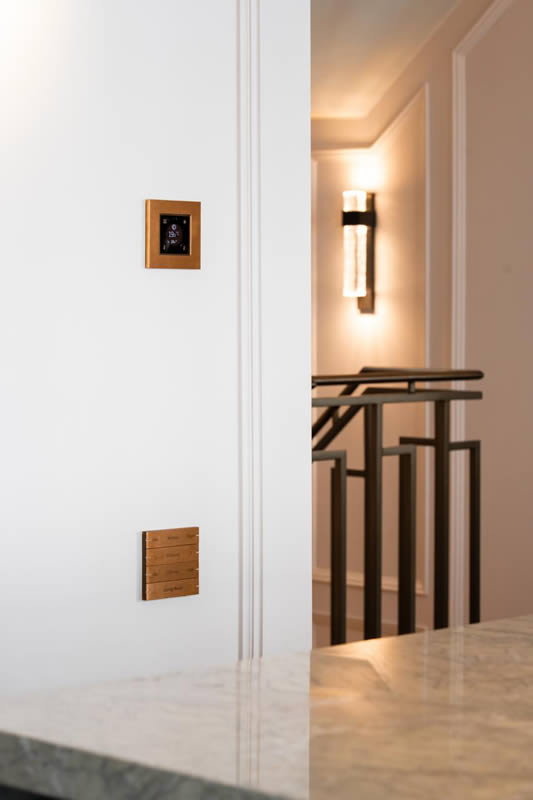
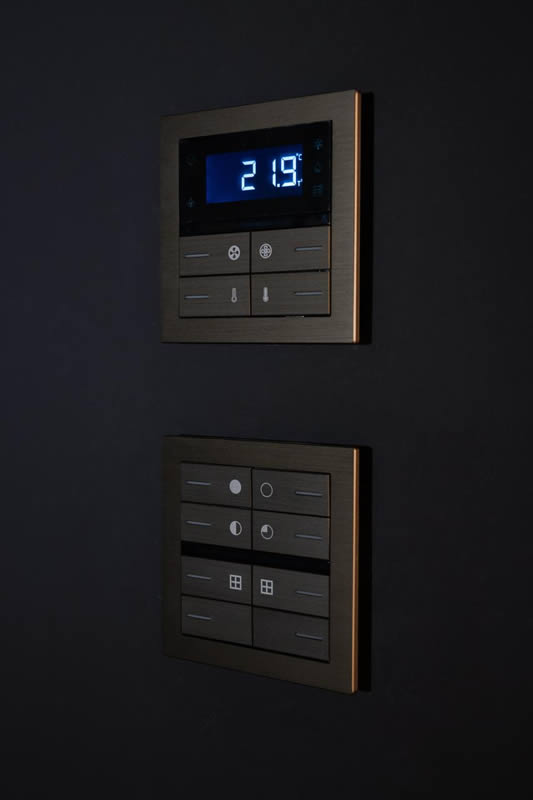
A sophisticated intelligent home should not require walls filled with control panels. Traditionally, different heating and cooling systems may each introduce their own thermostat or controller, creating visual clutter and making everyday adjustments unnecessarily complicated. With an integrated approach, discreet room sensors or carefully selected architectural wall controls can provide the information needed to manage the environment. Where appropriate, temperature and humidity sensing can be incorporated into the same elegant controls used for lighting and shading.
Homeowners can still make adjustments whenever they wish, using a familiar wall control, touchscreen or home application. However, the intention is not to encourage constant interaction. It is to provide simple, intuitive control when needed, while allowing the home to manage everyday comfort automatically.

Indoor Air Quality Is An Important Part of Home Comfort
Temperature is only one aspect of a comfortable and healthy indoor environment. Fresh air, humidity and ventilation are equally important, particularly in modern, highly insulated and airtight properties. Many larger new-build homes incorporate a system known as Mechanical Ventilation with Heat Recovery (MVHR). MVHR continuously introduces filtered fresh air into the home while extracting stale, moisture-laden air from areas such as bathrooms, kitchens and utility rooms. Before the outgoing air leaves the building, much of its heat is transferred to the incoming fresh air through a heat exchanger, without the two air streams normally mixing. This helps maintain ventilation while reducing the heat that would otherwise be lost through conventional extraction.
MVHR can contribute to improved indoor air quality, humidity management and energy efficiency, particularly in well-insulated homes. When considered as part of the wider comfort strategy, ventilation can work alongside heating, cooling and environmental monitoring to create a more consistent living environment. For example, where the equipment supports it, ventilation rates can respond to occupancy, humidity or indoor air quality measurements. The important distinction is that MVHR primarily provides ventilation and heat recovery; it does not ordinarily replace the home’s main heating or cooling system.
Understanding Energy Use and Improving Efficiency
An intelligent home can do more than maintain comfortable temperatures. It can also help homeowners understand how energy is being used. Through integrated monitoring and home applications, it may be possible to view heating and cooling demand, electricity consumption, solar generation and battery storage performance. This information provides valuable insight into how the property operates. Rather than relying on guesswork, homeowners can identify patterns, understand periods of higher demand and make informed decisions about their energy use. Energy efficiency should not come at the expense of comfort. A properly considered control strategy aims to balance both, reducing unnecessary operation while maintaining the environment occupants expect.
The Role of KNX in Integrated Comfort Control
Behind a well-designed intelligent home is a reliable control infrastructure that allows different systems to communicate and work together. At AVINU, we frequently employ KNX, an internationally established building management standard, to provide this foundation. KNX allows lighting, heating, cooling, shading and other building services to operate within a coordinated control strategy, rather than as isolated technologies. links to our services pages
For homeowners, the benefits are straightforward: greater consistency, simpler control and flexibility as their needs evolve. KNX also allows us to select suitable equipment from a wide range of manufacturers, rather than being restricted to one proprietary product ecosystem. The homeowner doesn’t need to understand the underlying technology. What matters is that the home works reliably, intuitively and efficiently.

The AVINU Approach Is About Designing Comfort Around Your Lifestyle
At AVINU, our starting point is never simply which heating or cooling equipment will be installed. We begin by understanding the property and, more importantly, the people who will live within it. How will different rooms be used? What temperatures feel comfortable? Are there areas particularly affected by sunshine? How important is individual room control? What are the expectations around energy efficiency?
We then work collaboratively with architects, mechanical designers, heating and cooling specialists, and other project professionals to develop a coordinated approach. Our role is to bring these systems together through intelligent design, integration and control. Once commissioned, we spend time refining the home’s behaviour, ensuring the system reflects the occupants’ preferences and daily routines. Our measure of success is not how frequently someone uses the controls, but how rarely they need to.
A Comfortable Home Should Simply Feel Right
The most successful intelligent homes are those where the technology quietly supports everyday life. Rooms feel comfortable. Heating and cooling work together rather than compete. Fresh air is maintained, unnecessary energy consumption is reduced, and homeowners remain in control without being burdened by complexity. Ultimately, intelligent comfort control is not about technology for its own sake. It is about creating a home that understands how it should operate, adapts to the people living within it and maintains a consistently comfortable environment..A home that is never unnecessarily hot or cold, and one where comfort simply happens.
Frequently Asked Questions About Intelligent Home Comfort Control
Intelligent heating and cooling control brings together different systems within a property, allowing them to operate in coordination. Rather than managing separate thermostats and controls, homeowners benefit from a consistent approach to comfort, with temperatures managed according to room requirements, occupancy and daily routines.
Yes. When properly integrated, underfloor heating and air conditioning can operate as part of a coordinated comfort strategy. This helps prevent unnecessary simultaneous heating and cooling, improving comfort and potentially reducing energy consumption.
Individual rooms may still require temperature sensors, but these do not necessarily need to be conventional wall-mounted thermostats. Sensors can often be incorporated discreetly into architectural controls or other suitable locations, helping preserve the interior design while maintaining accurate temperature monitoring.
It can help. By coordinating heating, cooling, shading and occupancy-based control, an intelligent home can reduce unnecessary energy use. Actual savings depend on the property’s construction, equipment, occupancy and how the systems are configured.
Mechanical Ventilation with Heat Recovery (MVHR) is a ventilation system that supplies fresh, filtered air while extracting stale air and recovering much of the heat that would otherwise be lost. It is particularly beneficial in highly insulated, airtight homes. Whether it is appropriate depends on the property’s ventilation design and requirements.
Yes. Where suitable occupancy information and controls are available, an intelligent home can adjust heating and cooling settings when rooms are not being used. The strategy must account for the response times of different systems, particularly slower systems such as underfloor heating.
Yes. Automated shading can reduce unwanted solar heat gain by responding to sunshine, room temperatures and other environmental conditions. This can improve comfort and reduce the need for mechanical cooling, particularly in rooms with extensive glazing.
Yes. Professionally designed intelligent home systems can provide app-based control, allowing homeowners to view temperatures, adjust settings and manage comfort across different rooms, including remotely where secure access has been configured.
Yes. While new builds and major refurbishments provide the greatest opportunities for coordinated system design, existing properties can often benefit from improved heating and cooling integration. The possibilities depend on the installed equipment, available infrastructure and extent of the planned works.
Darryl Roberts
Managing Director