The Benefits of Remote Access in Intelligent Homes
In today’s fast-paced, connected world, intelligent homes are no longer a luxury, they are quickly becoming the standard. At the heart of this transformation lies one of the most powerful features of modern smart living: remote access. The ability to monitor and control your home from anywhere in the world is not just convenient, it fundamentally changes how we interact with our living spaces.
Control at Your Fingertips
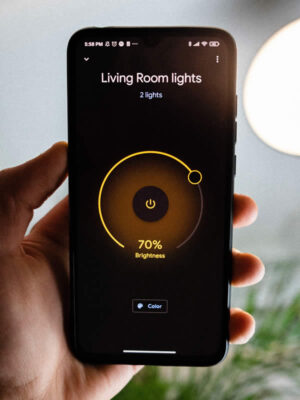
Remote access allows homeowners to manage key systems such as lighting, heating, security, and entertainment directly from their smartphone, tablet, or laptop. Whether you’re at work, on holiday, or simply in another room, you have full control of your home environment. Forgot to turn off the lights? Need to adjust the heating before you arrive home? It can all be done instantly, with just a few taps.
Enhanced Security and Peace of Mind
One of the most significant advantages of remote access is improved home security. Intelligent systems enable real-time monitoring through cameras, motion sensors, and smart locks. Homeowners can receive instant alerts if unusual activity is detected and take immediate action such as locking doors, activating alarms, or viewing live camera feeds.
This level of awareness provides peace of mind, whether you’re away for the day or travelling abroad. Your home is never truly unattended.
Energy Efficiency and Cost Savings
Remote access plays a crucial role in improving energy efficiency. By having the ability to control heating, cooling, and lighting systems remotely, homeowners can ensure that energy is only used when needed. For example, you can turn off heating if plans change or schedule systems to operate only during occupied hours.
Over time, this intelligent control leads to reduced energy consumption and noticeable cost savings, while also supporting a more sustainable lifestyle.
Convenience for Modern Living
Life is unpredictable, and remote access provides the flexibility to manage your home no matter what your day looks like. Whether it’s letting in a family member, checking if appliances have been left on, or adjusting your environment for comfort, everything is accessible in real time.
This level of convenience simplifies daily life and removes the small stresses that can add up over time.
Conclusion
Remote access is more than just a feature, it’s a fundamental shift in how we live. By offering control, security, efficiency, and convenience, it empowers homeowners to stay connected to their homes at all times.
In an increasingly digital world, intelligent homes equipped with remote access provide not just comfort, but confidence.
Frequently Asked Questions About Remote Access in Smart Homes
When professionally designed and configured, remote access can be extremely secure. Systems typically utilise encrypted communications, secure user authentication and carefully managed network infrastructure to protect against unauthorised access.
Depending on the design of the home, remote access can include:
Absolutely. Homeowners can receive real-time notifications if alarms are triggered, view live camera feeds, remotely lock doors and verify that their property remains secure while away.
Yes. Multiple users can typically have access to the system, with permissions tailored to suit individual family members and requirements.
Yes. An internet connection is required to access your home remotely. However, professionally designed intelligent homes are typically configured so that core functions continue to operate locally even if internet connectivity is temporarily lost.
In many cases, yes. Existing homes can often be upgraded with intelligent control and remote access functionality, although the level of integration will depend on the existing infrastructure and systems in place.
For many homeowners, remote access quickly becomes one of the most valued aspects of an intelligent home, providing greater convenience, improved security, enhanced energy efficiency and reassurance that the home can always be monitored and controlled.
Tom Green
Head of KNX Programming